


It is mid-winter in Edmonton. The roads are icy, your shoulders are hunched against the wind chill, and the deep freeze seems to have settled right into your bones. At times like this, standard massage therapy feels wonderful, but adding heat takes the therapeutic experience to an entirely different tier.
At Touch Massage & Wellness, we know that heat therapy is one of the fastest, most effective ways to coax stubborn musculature into relaxing. It turns a great massage into a transcendent one.
However, when browsing our massage therapy service menu, many clients hit a point of confusion. We offer two distinct heated stone modalities: Traditional Hot Stone Massage and the increasingly popular Jade Stone Massage.
Are they the same thing? Is one “better” than the other? Why would you choose a green stone over a black one?
While both utilize heated stones to melt tension, they employ entirely different materials, techniques, and thermal properties to achieve distinct physiological results. Understanding these differences is key to booking the appointment that will best serve your body’s current needs.
This comprehensive guide will take a deep dive into the battle of the stones—Volcanic Basalt vs. Nephrite Jade—to help you decide which heat therapy is right for you.
The Science Behind the Heat: Why It Feels So Good
Before diving into the specific stones, it is important to understand why applying heat to the body during a massage is so effective scientifically. It’s not just about feeling cozy; there are distinct physiological processes at play.
1. Vasodilation and Blood Flow
The primary benefit of heat is vasodilation. When heat is applied to the skin, the underlying blood vessels widen. This increases local blood flow, flooding tight, ischemic (oxygen-deprived) tissues with fresh oxygen and nutrients. Simultaneously, this increased circulation helps flush out metabolic waste products like lactic acid that contribute to muscle soreness. (Source: Healthline: Benefits of Heat Therapy)
2. The “Gate Control” Theory of Pain
Heat can actually trick your brain into feeling less pain. The “Gate Control Theory” suggests that non-painful input (like soothing heat) closes the “nerve gates” to painful input, preventing pain sensations from traveling to the central nervous system. Essentially, the sensation of warmth overrides the sensation of pain.
3. Increased Tissue Elasticity
Think of your fascia and muscles like taffy. When cold, they are brittle and hard to stretch. When warmed, they become pliable. Heat increases the elasticity of collagen tissues, allowing your Registered Massage Therapist (RMT) to achieve a deeper stretch and greater range of motion with less force.
Knowing this, we can look at how different stones deliver this heat differently.
The Classic Contender: Traditional Hot Stone Massage
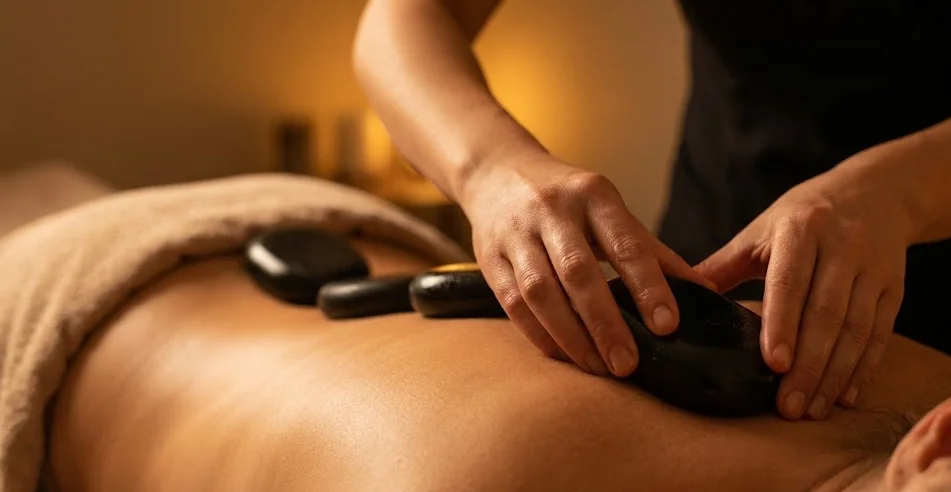
When most people imagine a deluxe, resort-style spa treatment, they picture smooth, dark, river-worn stones lined up along a person’s spine. This is the traditional Hot Stone massage, a modality that has stood the test of time for good reason.
The Material: Volcanic Basalt
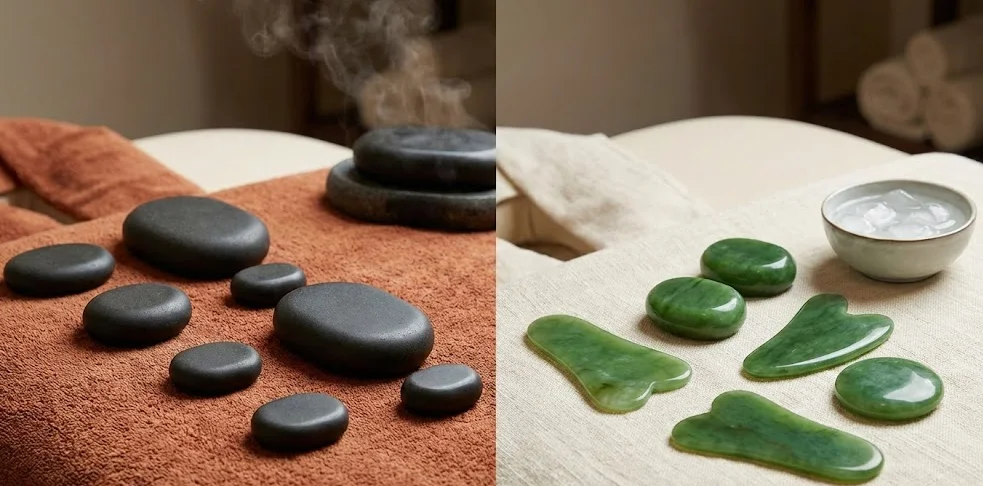
The stars of this show are basalt stones. Basalt is an igneous volcanic rock formed from the rapid cooling of lava at the earth’s surface. Because of their volcanic origins, these stones are incredibly rich in iron and magnesium.
Why does this geology matter for your massage? That mineral composition gives basalt high density and excellent heat retention properties. They absorb heat from the specialized water bath and release it slowly, steadily, and deeply into your musculature over many minutes.
The stones used at our clinics are “river-worn,” meaning countless years of natural water flow have polished them perfectly smooth, making them feel like silky, weighted extensions of the therapist’s hands.
The Experience: Grounding and Sedative
A Hot Stone massage is deeply rhythmic and grounding. The therapist will often begin by placing larger, stationary stones on specific energy centers or areas of major bulk tension—beneath the shoulder blades, along the sacrum, or even in the palms of your hands. The physical weight of the stone, combined with the pervasive heat, acts almost like a sedative for the nervous system.
Once your tissues are pre-warmed by the stationary stones, the therapist uses oiled, heated stones to perform gliding strokes (effleurage and petrissage) across the body. The heat emanates from the stone, penetrating much deeper into the muscle layers than hand pressure alone could achieve without causing discomfort.
Primary Benefits of Hot Stone
The hallmark of the Hot Stone massage is deep, sedative relaxation.
-
Melting “Global” Tension: If you feel stiff all over—like you are wearing a suit of armor made of tension—basalt stones act like a hot knife through butter. The sustained heat softens fascia globally.
-
Nervous System Reset: The warmth shifts your body from a sympathetic state (fight or flight—common during stressful work weeks or driving on icy roads) to a parasympathetic state (rest and digest). It is very common for clients to drift off to sleep during this treatment.
-
Emotional Comfort: There is a primal comfort to the weight and warmth of these stones that many find emotionally soothing during times of high stress or seasonal affect struggles.
The Vibrant Challenger: Jade Stone Massage
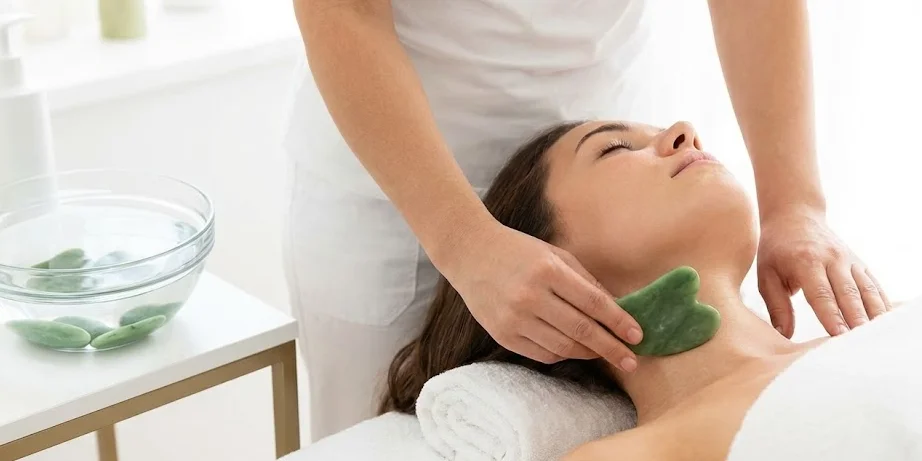
Jade Stone massage is sometimes viewed as the “newcomer” to Western spas, but its roots in Eastern wellness practices are ancient. It offers a sophisticated, dynamic twist on heat therapy that makes it a distinct therapeutic tool compared to its basalt counterpart.
The Material: Nephrite Jade
Unlike volcanic basalt, jade is a metamorphic rock. In many Eastern traditions, jade is considered a healing stone, believed to possess vital energy (Qi) and promote balance. You can read more about the historical significance of this practice in our article on The Ancient Art of Jade Stone Massage.
From a physical standpoint, jade holds very different properties than basalt. It is extremely dense—even denser than basalt. This means that when heated, a jade stone transfers its heat into the body much faster and deeper.
However, the true superpower of jade is its versatility. It doesn’t just hold heat well; it also holds cold exceptionally well.
The Technique: The Power of Contrast Therapy
This is where Jade Stone massage, often a favorite at our Tamarack Location, diverges sharply from Hot Stone therapy.
While a Hot Stone massage is an immersion in continuous, sustained warmth, Jade Stone therapy is dynamic. Because jade holds temperature extremes so effectively, therapists can utilize alternating temperatures.
The treatment involves heated jade stones to quickly melt tension, followed immediately by cooler jade stones applied to the same area.
This technique creates what is known as a “vascular flush.” The hot stones dilate the blood vessels, pulling fresh blood into the area. The cool stones immediately follow, causing the vessels to constrict, pushing out stagnant blood and inflammatory agents. This pumping action is incredibly effective for healing and is the basis of many sports recovery protocols.
Furthermore, because jade is cut and polished rather than just river-worn, the stones come in specific anatomical shapes designed to contour the body—tools to scrape gently along the neck (similar to gua sha), fit snugly around knee joints, or work precisely into trigger points.
Primary Benefits of Jade Stone
While Jade Stone is relaxing, its benefits lean slightly more toward therapeutic repair and inflammation management.
-
Combating Inflammation: This is the biggest differentiator. Heat alone can sometimes exacerbate acute inflammation (think of putting a hot pad on a fresh sprain—it throbs). By introducing the cooling element, Jade Stone massage can treat injured or irritated areas (like tendinitis or arthritis) that would otherwise be sensitive to pure heat.
-
Deeper Tissue Access with Less Pain: Because the density of heated jade penetrates so quickly, the muscles release almost instantly. This allows the therapist to perform what feels like Deep Tissue Massage work with very little physical force, resulting in less post-massage soreness.
-
Revitalization vs. Sedation: While Hot Stone tends to make clients feel sleepy and heavy (in a good way), the alternating temperatures of Jade Stone tend to leave clients feeling energized, alert, and “lighter” after the session.
Head-to-Head Comparison: At a Glance
Here is a quick summary of how these two therapies stack up:
| Feature | Hot Stone (Basalt) | Jade Stone (Nephrite) |
| Stone Origin | Volcanic Rock (River worn) | Metamorphic Rock (Cut & polished) |
| Key Characteristic | Retains heat for long periods; slow release. | Extremely dense; transfers heat fast; holds BOTH hot and cold well. |
| Temperature Dynamic | Constant, sustained warmth. | Alternating Hot and Cool (contrast therapy). |
| Main Feeling | Heavy, grounding, sedative, comforting. | Vibrant, penetrating, energizing, flushing. |
| Best For | Stress reduction, anxiety, insomnia, cold weather blues. | Chronic pain with inflammation, injuries, sciatica, those sensitive to prolonged heat. |
How to Choose: Which is Right for You Today?
Making the choice between Jade Stone and Hot Stone comes down to listening to your body and understanding your primary goal for the session.
Choose Traditional Hot Stone If:
-
Your primary goal is mental and emotional de-stressing. If you are burnt out, anxious, or your mind won’t stop racing, the heavy, grounding nature of basalt stones provides an almost womb-like comfort. It is the ultimate “treat yourself” relaxation experience.
-
You are generally chilly and just want to be warm. During the depths of an Edmonton cold snap, when you feel like you haven’t been truly warm in weeks, the sustained heat of basalt is unbeatable.
-
Your muscle tension is generalized, not acute. If you have “global” tightness from sitting at a desk all day, rather than a specific, sharp injury, Hot Stone will melt that generalized armour of tension effectively.
Choose Jade Stone Massage If:
-
You have a specific injury or chronic inflammatory condition. If you are dealing with plantar fasciitis, a rotator cuff issue, or an old sports injury that flares up, Jade Stone is the superior choice. The cooling element ensures you don’t aggravate inflammation while still getting the benefits of heat.
-
You want deep tissue results without the “no pain, no gain” mentality. If you need deep work but find standard Deep Tissue massage too intense, the rapid heat transfer of jade prepares the muscle for deep work faster and more comfortably.
-
You find traditional Hot Stone “too much.” Some people find that 90 minutes of sustained heat makes them feel woozy, overheated, or claustrophobic. The intermittent cooling action of the jade stones keeps the body’s temperature regulated, making it a more comfortable experience for heat-sensitive individuals.
-
You want to feel energized afterward. If you have to return to work or be active after your massage, the vascular flushing effect of Jade Stone will leave you feeling invigorated rather than ready for a nap.
Jade Stone Vs Hot Stone Massage Conclusion
Both Hot Stone and Jade Stone massages are incredible therapies used by the skilled Registered Massage Therapists at Touch Massage & Wellness. They both utilize the power of thermal energy to achieve results that hands alone simply cannot duplicate.
You aren’t making a “wrong” choice with either; you are simply choosing a different route to relaxation and relief.
Sometimes you need the slow, grounding burn of volcanic basalt to quiet your mind and melt away the stress of the city. Other times, you need the vibrant, healing balance of jade to flush out inflammation and revitalize your body.
If you are still unsure which heated therapy is best suited to your current aches and pains, give us a call at our Tamarack Location or speak to your therapist before your session.
Ready to experience the difference heat makes?
