


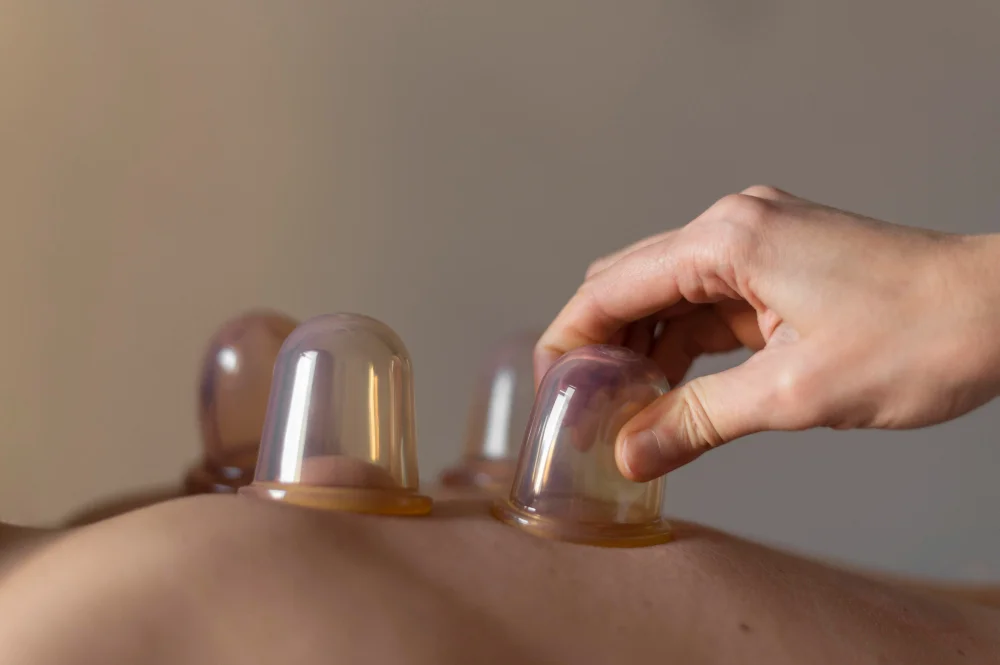
You may have seen professional athletes or celebrities sporting circular, reddish marks on their shoulders and backs. These aren’t injuries; they are the visual evidence of one of the most effective recovery tools available today: Myofascial cupping.
Stress doesn’t just live in our minds; it takes up residence in our bodies. It manifests as tension headaches behind the eyes, a stiff neck after hours at a desk, or a lower back that aches every time you stand up. While we often view these aches as a normal part of modern living, they are actually signals that our body’s soft tissues are in distress.
At The Touch Massage, we understand that traditional massage—while wonderful—isn’t always enough to break through years of accumulated tension. You may be familiar with Swedish or Deep Tissue massage, which rely on compression (pushing into the tissue). But there is another modality that works in reverse, using decompression to unlock the body’s healing potential.
In this guide, we will dive deep into what myofascial cupping is, the science of the fascia, why those red marks appear, and how this ancient therapy can revitalize your health right here in Edmonton.
Understanding the “Myofascial” in Myofascial Cupping
To understand why this therapy is so effective, we first need to understand the anatomy of the body—specifically, the fascia.
Most people think of the skeletal system as the frame of the body and muscles as the motors. However, there is a connective tissue that holds it all together. Fascia is a densely woven web of collagen fibers that surrounds and penetrates every muscle, bone, nerve, artery, and vein. Think of it like a high-tech, internal body suit. It essentially keeps your shape and allows your muscles to glide smoothly against one another during movement.
The Problem: When Fascia Gets “Sticky”
In a healthy body, fascia is hydrated, flexible, and slippery. It stretches as you move. However, life gets in the way. Several factors can cause the fascia to become rigid, dehydrated, and sticky:
-
Physical Trauma: Injuries, surgeries, or falls.
-
Repetitive Stress: Typing, mouse usage, or assembly line work.
-
Sedentary Lifestyle: Sitting for long periods restricts blood flow.
-
Inflammation: Chronic stress and poor diet.
When fascia becomes tight, it exerts excessive pressure on the pain-sensitive structures it surrounds. It can adhere to the muscle underneath (adhesions), restricting range of motion and causing “knots.” This is where Myofascial cupping shines.
What Is Myofascial Cupping?
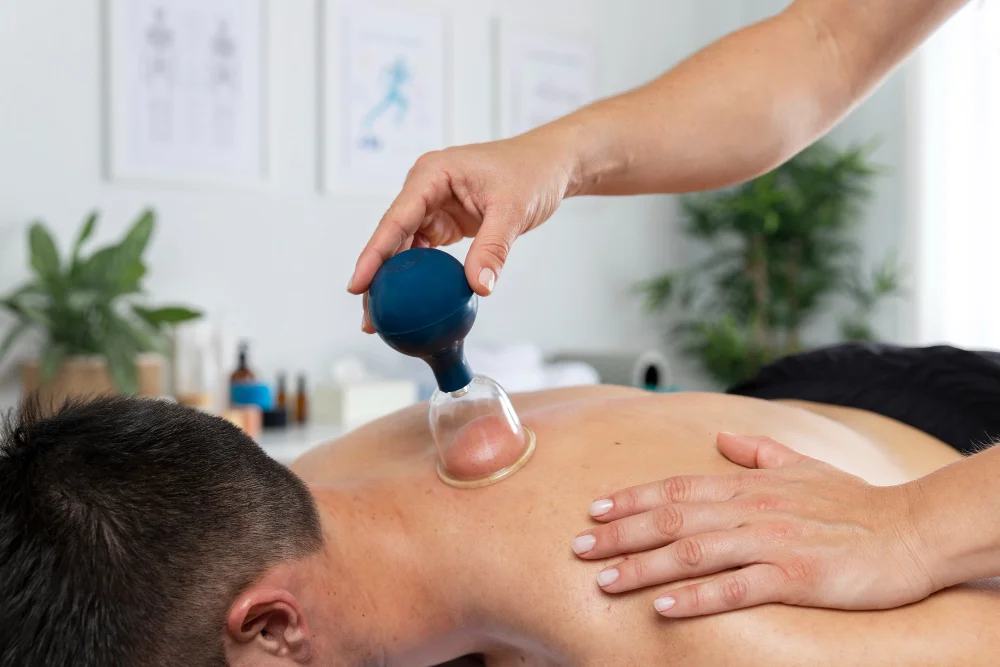
Myofascial cupping is a specialized therapy that combines ancient cupping techniques with modern understanding of myofascial release. While traditional massage applies positive pressure (pushing tissues together), cupping applies negative pressure (pulling tissues apart).
By creating suction on the skin surface, the cup lifts the fascia away from the underlying muscle. This separation allows fresh, oxygenated blood to flood the area, rehydrating the tissue and breaking up those sticky adhesions. It is, in essence, a way to create space inside your body where there was previously compression and pain.
A Brief History: From Ancient Roots to Modern Medicine
While it feels like a modern trend, the roots of cupping run deep. It is a time-honored technique practiced by multiple cultures for thousands of years. The Ebers Papyrus, one of the oldest medical textbooks in the world, describes the ancient Egyptians using cupping as early as 1,550 B.C.
In traditional Chinese Medicine (TCM), cupping was used to dispel “stagnation” and improve the flow of “Qi” (life force). The ancient Greeks and Hindus also utilized variations of the practice. Historically, tools were rudimentary—hollowed-out animal horns, bamboo, or clay pottery were common.
In the mid-20th century, as Western medicine began to focus heavily on pharmaceuticals and surgery, holistic manual therapies like cupping took a backseat. However, in recent decades, there has been a massive resurgence. Modern science has begun to validate what the ancients knew: manipulating blood flow and connective tissue is vital for recovery. Today, Myofascial cupping is a staple in the recovery routines of Olympic swimmers, CFL players, and everyday Edmontonians seeking relief.
The Process: What Happens During a Session at The Touch Massage?
If you have never experienced a cupping session, the concept might seem intimidating. However, at The Touch Massage, we ensure the process is relaxing, safe, and tailored to your comfort level.
1. The Setup and Suction
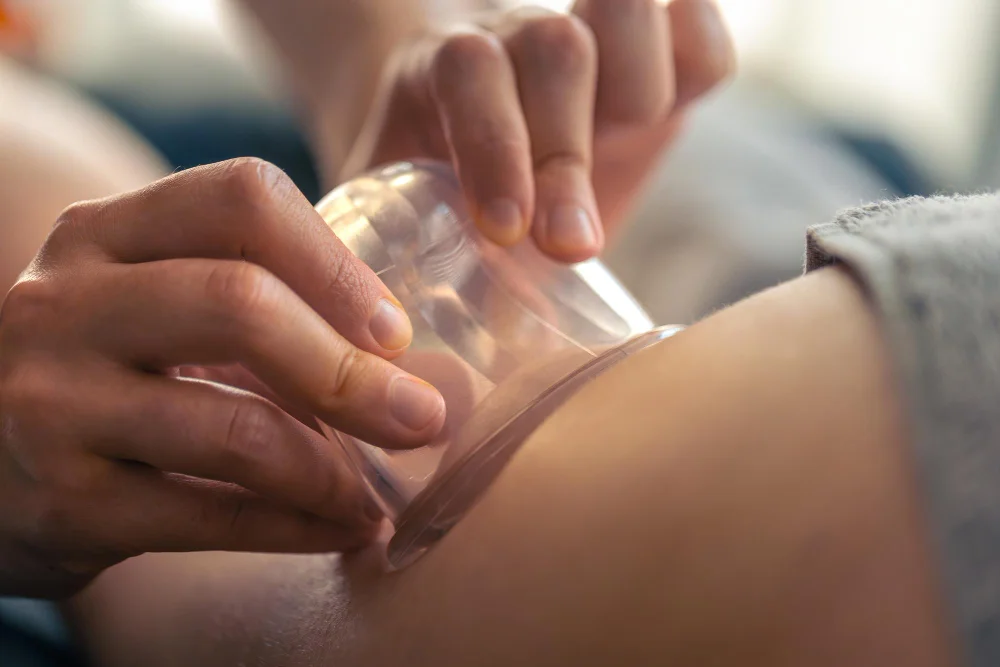
We utilize specialized cups—often glass, silicone, or high-grade plastic—that are placed on the skin. There are two primary ways suction is created:
-
Fire Cupping (Traditional): A cotton ball soaked in alcohol is lit and briefly inserted into a glass cup to consume the oxygen. The cup is then immediately placed on the skin. As the air cools, a vacuum seals the cup to the body.
-
Pump/Pneumatic Cupping (Modern): A mechanical pump is used to extract air from the cup. This allows the therapist to have precise control over the level of suction.
2. Static vs. Sliding Cupping
Depending on your needs, your therapist may use two different techniques:
-
Static Cupping: The cups are placed on specific trigger points (knots) or areas of high tension and left in place for 5 to 15 minutes. This is ideal for deep, stubborn tension.
-
Sliding (Gliding) Cupping: Oil or lotion is applied to the skin first. The therapist applies the cup and then drags it along the muscle fibers and fascial lines. This feels like a “reverse massage” and is excellent for lymphatic drainage and covering large areas like the IT bands or the back.
3. The Sensation
Does it hurt? Generally, no. Most clients describe the sensation as a tight pulling or stretching feeling. It can be intense in areas of severe tightness, but it should not be painful. Many clients find the release so soothing that they fall asleep during the session.
Decoding the “Red Circles”: It’s Not a Bruise!
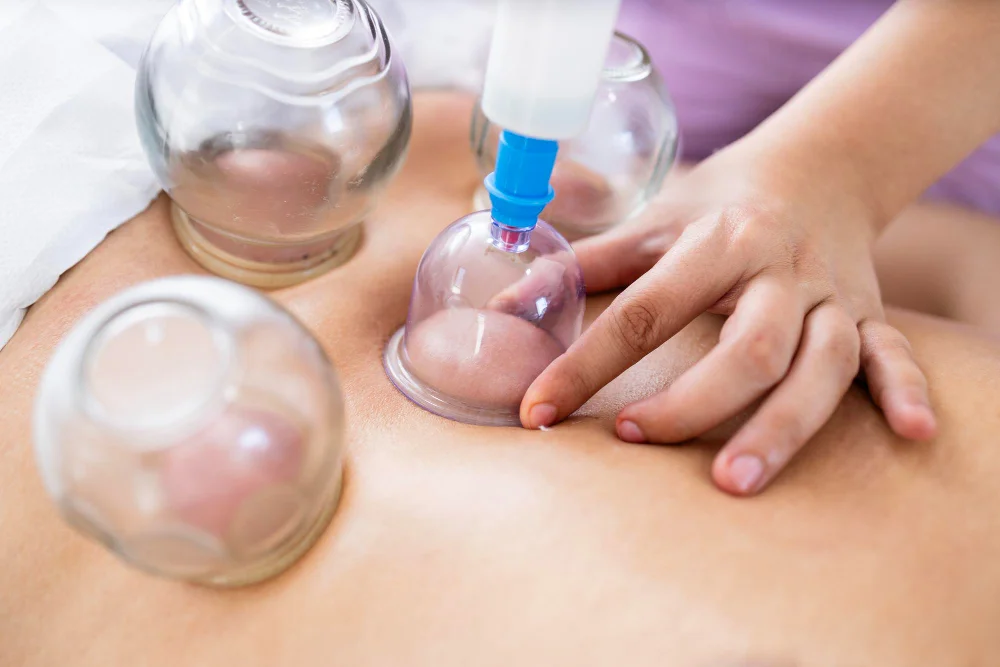
The most distinctive feature of Myofascial cupping is the circular marks left behind. It is vital to understand that these are not bruises.
A bruise (contusion) is caused by impact trauma that breaks capillaries, causing blood to leak into the tissue. It is painful to the touch.
The marks from cupping are called petechiae or ecchymosis. They are caused by the vacuum drawing stagnant blood, cellular waste, and toxins from deep within the tissue up to the surface. This “old blood” is then processed by your lymphatic system and flushed out of the body.
-
Dark Purple/Black: Indicates severe stagnation and restricted blood flow.
-
Bright Red: Indicates high heat or acute inflammation.
-
Light Pink: Indicates healthy blood flow and minor stagnation.
These marks are rarely painful and typically fade within 3 to 7 days, depending on your body’s circulation speed. Wear them as a badge of honor—it means your body is healing!
The Extensive Benefits of Myofascial Cupping
Why should you choose this therapy over a standard massage? Here is how Myofascial cupping can transform your physical health.
1. Pain Relief and Muscle Recovery
By lifting the fascia, cupping relieves pressure on pain receptors. It is incredibly effective for:
-
Chronic lower back pain.
-
Neck and shoulder stiffness (Text Neck).
-
Sciatica.
-
Plantar Fasciitis.
-
Tight hamstrings and calves.
2. Improved Circulation and Detoxification
Edmonton winters often mean we move less, leading to sluggish circulation. The suction from the cups acts as a vacuum cleaner for your circulatory system. It pulls fresh blood into areas that are ischemic (lacking blood flow) and pulls metabolic waste (like lactic acid) out of the muscles so the lymphatic system can dispose of it.
3. Increased Range of Motion
If you feel “stuck” or stiff, it is likely due to fascial adhesion. Cupping literally separates the layers of tissue that have become fused together. This mechanical separation restores the “glide” between muscles, instantly improving flexibility. This is why golfers, runners, and weightlifters love it.
4. Sedating the Nervous System
Interestingly, cupping has a profound effect on the autonomic nervous system. The pulling sensation engages the parasympathetic nervous system (the “rest and digest” mode). This promotes deep relaxation, lowers cortisol levels, and can help alleviate anxiety and insomnia.
5. Respiratory Health
This is a lesser-known but powerful benefit. Cupping on the upper back can help break up phlegm and congestion in the lungs. It is often used as a complementary therapy for asthma, bronchitis, or lingering coughs from seasonal colds.
Who Is Myofascial Cupping For?
At The Touch Massage, we see a diverse range of clients who benefit from this therapy.
The Office Warrior: If you sit at a desk for 8 hours a day, your chest muscles tighten, and your back muscles overstretch and lock up (Upper Crossed Syndrome). Cupping opens up the chest and releases the glue-like tension between the shoulder blades.
The Athlete: From the recreational jogger in the River Valley to the competitive powerlifter, athletes generate high amounts of metabolic waste in their muscles. Cupping speeds up recovery time, allowing you to train harder and more frequently.
The Labourer: Edmonton is home to many tradespeople. Repetitive motion and heavy lifting take a toll on the joints and fascia. Cupping provides deep relief that manual massage sometimes cannot reach.
Safety and Contraindications
While Myofascial cupping is a natural and safe modality, it is not suitable for everyone. At The Touch Massage, your safety is our priority. We conduct a thorough intake to ensure you are a good candidate.
Cupping is generally not recommended for:
-
Pregnant women: Specifically on the lower back and abdomen.
-
Those with bleeding disorders: Hemophilia or those on high doses of blood thinners.
-
Severe skin conditions: Eczema, psoriasis, or open wounds in the area to be treated.
-
Systemic infections: High fever or organ failure.
-
Cancer patients: Specifically those currently undergoing active treatment (unless cleared by an oncologist).
-
Acute injuries: We do not cup directly over a fresh muscle tear or a broken bone.
Please consult with your doctor before trying new therapies if you have severe underlying medical conditions.
Aftercare: Maximizing Your Results
To get the most out of your Myofascial cupping session at The Touch Massage, follow these post-treatment tips:
-
Hydrate: You have just mobilized a lot of toxins and cellular waste. You need water to flush them out. Aim to drink an extra liter of water in the 24 hours following your session.
-
Keep Warm: The treated areas will be sensitive to cold and wind. In our Edmonton climate, ensure you cover up the cupped areas (wear a scarf or layers) to keep the muscles loose.
-
Avoid Intense Cardio: Your body is in a state of repair. Light stretching or walking is fine, but avoid heavy lifting or high-intensity interval training for the rest of the day.
-
Avoid Alcohol: Your liver is busy processing the waste released by the cupping; adding alcohol to the mix can lead to dehydration and a feeling of grogginess.
Conclusion: Reclaim Your Body at The Touch Massage
We live in a world where stress is often worn as a badge of honor, but your body keeps the score. Ignoring the tightness, the limited movement, and the chronic aches will only lead to further injury down the road.
While Myofascial cupping has been the subject of curiosity and debate, the results speak for themselves. It is not magic; it is mechanics. By decompressing the tissue, improving blood flow, and calming the nervous system, you give your body the physical space it needs to heal itself.
Whether you are suffering from a specific injury, looking to improve your athletic performance, or simply need to reset after a stressful month, this therapy offers a unique path to wellness.
Ready to feel the difference?
Stop living with pain and restriction. Visit The Touch Massage in Edmonton to get your energy back in line and start feeling refreshed. Our experienced therapists are ready to customize a treatment plan that addresses your specific needs.
Don’t let tension dictate your life. Book your Myofascial Cupping session with The Touch Massage today and experience the relief you deserve.
