


Have you ever left a massage feeling physically looser, yet somehow still mentally heavy? Or perhaps you’ve experienced the opposite: you feel relaxed, but that nagging knot in your shoulder just won’t go away.
In the West, we tend to view the body as a machine made of parts: muscles, bones, and nerves. When a part “breaks” or hurts, we try to fix that specific spot. But in traditional Thai medicine—the foundation of everything we do here at Touch Massage & Wellness—the body is viewed differently. It is seen as an interconnected network of energy.
When you step into our clinic in Edmonton, especially for a Traditional Thai Massage, you aren’t just getting your muscles rubbed. You are receiving a tune-up of your body’s electrical system. This system is made up of Sen Lines.
If you have ever heard your therapist mention “blocked energy” or “wind gates,” they are talking about Sen. But what exactly are these lines? Are they real? And how does working on them help you feel better?
In this guide, we are going to demystify the ancient concept of Sen Lines, explain the science behind the sensation, and show you how “unblocking” them can lead to profound healing.
What Are Sen Lines? (The Highway Analogy)
To understand Sen Lines (or Sen Sib), imagine the road system here in Edmonton.
You have the Anthony Henday Drive (the big loop), the Whitemud (the main artery), and thousands of smaller residential streets. When traffic flows smoothly on these roads, everyone gets to their destination on time. The city functions. Life is good.
But what happens if there is an accident on the Whitemud? Traffic stops. Cars back up for miles. Drivers get frustrated (emotional stress), and emergency vehicles can’t get through (immune system suppression). The “blockage” in one area causes chaos across the whole city.
Your body works the same way.
In Thai Medical Theory, Prana (life energy) flows through invisible pathways in your body called Sen Lines. There are said to be 72,000 of these lines, but in a standard massage, we focus on the 10 Major Lines (the Sen Sip).
-
When Sen Lines are open: Energy flows freely. Your blood circulates, your digestion works, your mood is stable, and your muscles are pliable.
-
When Sen Lines are blocked: Energy stagnates. This manifests as stiffness, pain, lethargy, headaches, or even anxiety.
Is This Real Science?
For skeptical Western minds, “energy lines” can sound a bit like magic. However, modern anatomy offers a fascinating parallel: Fascia.
Fascia is the connective tissue that wraps around every muscle, bone, and organ in your body. It carries nerve endings and fluids. Remarkably, the pathways of the ancient Sen Lines map almost perfectly to the physiological chains of fascia (myofascial meridians) that modern science has identified.
When a Thai massage therapist presses on a “Sen Line,” they are often compressing a major fascial line, stimulating blood flow, releasing nerve impingement, and hydrating the tissue. Whether you call it Sen or Myofascia, the result is the same: the restoration of movement and life.
The Roots of the Practice
It is important to understand that this isn’t a “new age” trend. The concept of Sen Lines dates back over 2,500 years. It is rooted in Ayurvedic medicine from India and was brought to Thailand by doctors and monks, most notably Jivaka Kumar Bhaccha, the personal physician to the Buddha and the “Father Doctor” of Thai medicine.
At Touch Massage & Wellness, our founder Chanyanut brings this authentic lineage to Edmonton. Having worked in a Thai hospital, she understands that Thai massage isn’t just relaxation—it is a preventative medical practice designed to keep these lines open before illness sets in.
The “Sen Sip”: The 10 Major Lines You Should Know
While there are thousands of lines, a skilled therapist focuses on the “Big 10.” Each line is associated with different physical ailments and organ functions.
Here is a simplified breakdown of the lines your therapist is likely tracing during your session.
1. Sen Sumana (The Core Line)
-
Pathway: Runs right down the center of your body, from the tongue down to the navel.
-
Function: This is the “Whitemud Drive” of your body. It governs the heart, the tongue, and the respiratory system.
-
Symptoms of Blockage: Chest tightness, asthma, speech impediments, digestive issues, and emotional heartache.
-
The Massage: Therapists rarely press deep into the center of the stomach (it can be uncomfortable), but they will work around the diaphragm and chest to open this channel.
2. Sen Ittha (The Left Channel)
-
Pathway: Runs from the left nostril, down the neck, along the back, and crosses to the abdominal area.
-
Function: Associated with “Moon” energy (cooling/feminine). It controls the left side of the body, headaches, and nasal issues.
-
Symptoms of Blockage: Left-sided migraines, sinus congestion, neck stiffness on the left side.
3. Sen Pingkhala (The Right Channel)
-
Pathway: The mirror image of Ittha, running from the right nostril down the right side of the body.
-
Function: Associated with “Sun” energy (heating/masculine). It controls the liver and gallbladder.
-
Symptoms of Blockage: Right-sided headaches, liver sluggishness, anger or frustration (emotions often tied to the liver in Eastern medicine).
4. Sen Kalathari (The Movement Line)
-
Pathway: This is the most famous line for athletes! It radiates from the navel out to the arms and legs, ending at the fingers and toes.
-
Function: It governs the movement of your limbs, joints, and tendons.
-
Symptoms of Blockage: Arthritis, carpal tunnel syndrome, knee pain, frozen shoulder, and general stiffness.
-
The Massage: When your therapist pulls your fingers or cracks your knuckles, they are stimulating the ends of the Kalathari line to release tension all the way back to your core.
5. Sen Sahatsarangsi (The Eye & Leg Line)
-
Pathway: Runs from the left eye, down the throat, chest, and abdomen, and down the outside of the left leg.
-
Function: Connected to vision and the urogenital system.
-
Symptoms of Blockage: Eye strain (common for office workers!), headaches behind the eyes, and sciatica pain running down the outside of the leg.
6. Sen Thawari (The Counterpart)
-
Pathway: Mirror image of Sahatsarangsi, running from the right eye down the outside of the right leg.
-
Function: Similar to the above, governing the right eye and right leg.
-
Symptoms of Blockage: Right-sided sciatica, red or dry eyes.
7. Sen Lawusang (The Ear Line)
-
Pathway: Runs from the left ear down to the solar plexus.
-
Function: Hearing and balance.
-
Symptoms of Blockage: Tinnitus (ringing in ears), vertigo, ear infections, and throat soreness.
8. Sen Ulangka (The Right Ear Line)
-
Pathway: Mirror image of Lawusang on the right.
-
Function: Hearing and balance on the right side.
9. Sen Nanthakrawat (The Elimination Line – Part 1)
-
Pathway: Located in the abdominal area.
-
Function: Governs “outgoing” waste (urine/stool).
-
Symptoms of Blockage: Constipation, bloating, urinary retention, and IBS.
-
The Massage: This is why Thai massage often includes gentle abdominal work. It’s not just for muscles; it’s to stimulate peristalsis (digestion).
10. Sen Khitchanna (The Elimination Line – Part 2)
-
Pathway: Also in the abdominal area, specifically interacting with the reproductive organs.
-
Function: Libido and reproductive health.
-
Symptoms of Blockage: Menstrual cramps, low libido, and reproductive stagnation.
How Does a Therapist “Unblock” a Line?
Now that you know the map, how do we fix the road? If you have had a Swedish massage, you are used to long, gliding strokes (effleurage) using oil. The goal there is usually relaxation and blood flow.
Thai Massage is different. It is structural and rhythmic. Because Sen Lines are often deep within the muscle and fascia, a light rub won’t reach them. To affect the flow of energy, we use three primary techniques:
1. Thumb Pressing (Acupressure)
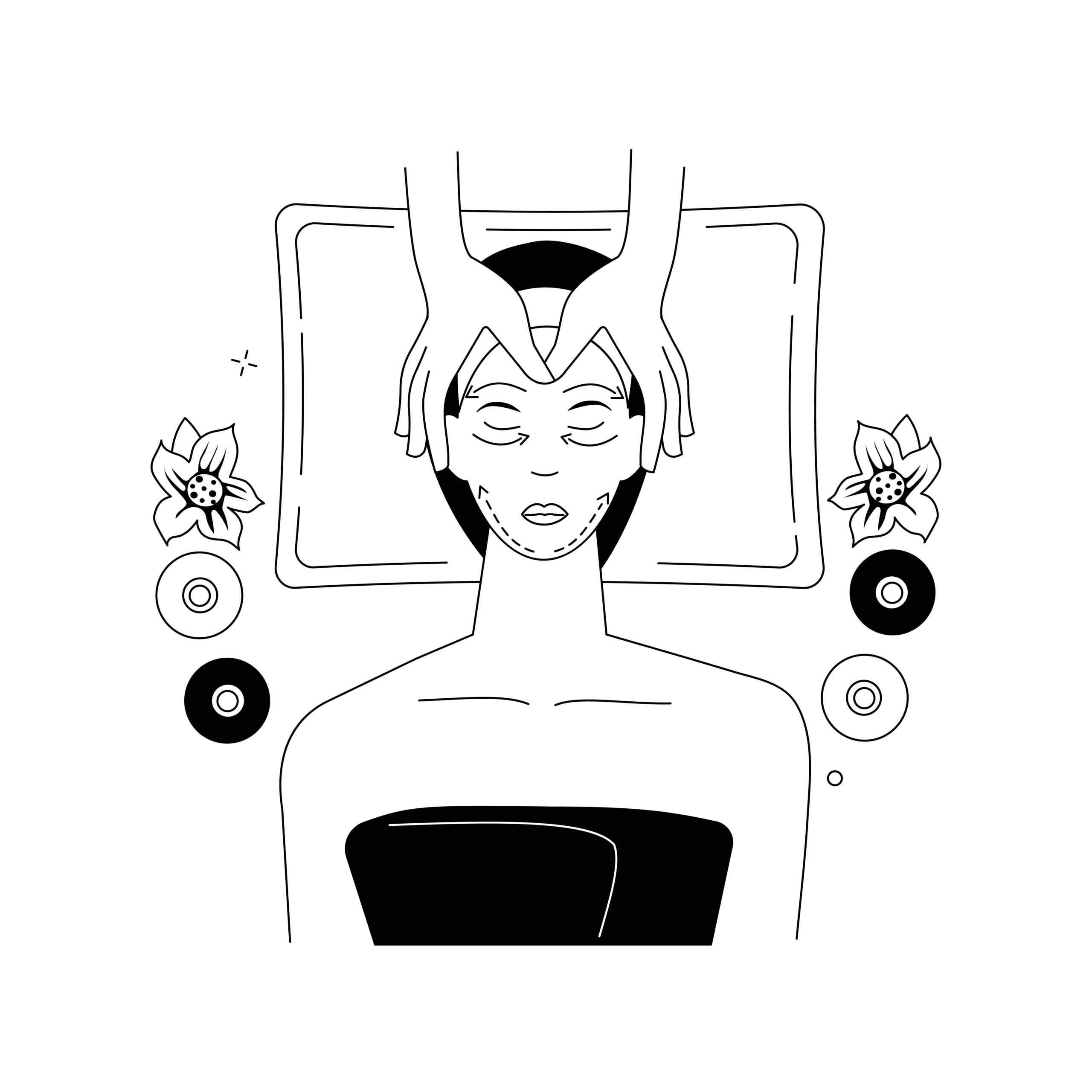
This is the hallmark of Thai massage. The therapist will use their thumbs to press rhythmically along the Sen Lines. They aren’t just pressing random spots; they are tracing the line from start to finish.
-
The Sensation: You might feel a “good hurt.” It feels like a mix of pressure and relief. Sometimes, when the therapist presses a point on your leg, you might feel a zap or a release in your back. That is the Sen Line conducting the signal!
2. Palming and Walking
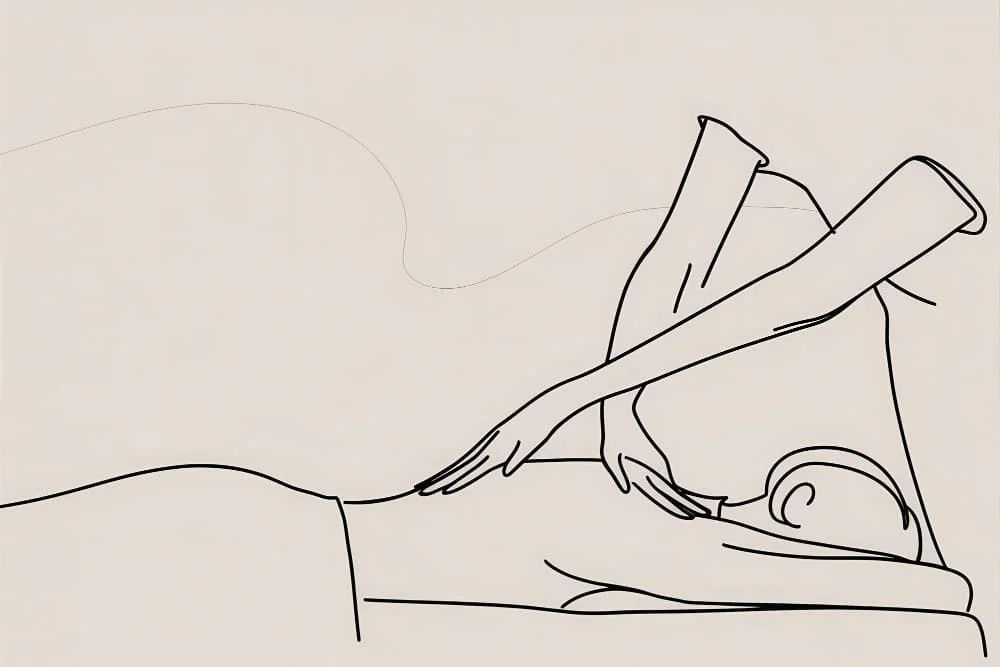
For larger lines (like those on the back of the thighs or the back), thumbs might be too sharp. Therapists will use their palms, elbows, or even their feet to apply broad pressure. This flushes the energy through the line, like pushing water through a hose to clear a kink.
3. Stretching (Yoga-Based Traction)
Once the lines have been warmed up and pressed, the therapist will stretch your body into yoga-like positions.
-
Why stretch? Imagine a garden hose that is twisted. Water can’t get through. Pressing the hose helps, but straightening the hose is what truly restores the flow. Stretching elongates the Sen Lines, ensuring that the energy you just released can travel freely from head to toe.
Signs Your Energy is Blocked (Do You Need This?)

How do you know if your Sen Lines are the culprit? Here are a few signs that you might benefit more from a Sen-focused Thai massage than a standard relaxation massage:
-
Migrating Pain: The pain moves around. Yesterday it was your neck, today it’s your shoulder blade. This suggests a systemic flow issue rather than a single injured muscle.
-
Chronic Fatigue: You sleep 8 hours but wake up tired. Your “battery” isn’t recharging because the connection is poor.
-
Cold Extremities: Your hands and feet are always cold, even when it’s not -30°C in Edmonton. This indicates poor circulation of both blood and energy to the outer Sen Lines (Kalathari).
-
Emotional Irritability: You feel “stuck” or short-tempered for no reason. In Thai medicine, physical stagnation leads to emotional stagnation.
-
Stiffness After Exercise: You stretch, but you never seem to get more flexible. Your fascia may be glued down along the Sen Lines.
What to Expect During a “Sen” Focused Session
If you visit us at Touch Massage & Wellness and want to focus on these lines, we recommend booking a Traditional Thai Massage (60, 90, or 120 minutes).
-
No Oil: Traditional Sen work is best done dry, over comfortable clothing. This gives the therapist better grip to stretch the tissues without slipping.
-
Interaction: It is an active massage. The therapist moves you. You are a participant in your own healing.
-
Communication: If a point feels too tender, tell us. A blockage can be sensitive, but it should never be sharp, shooting pain. We work with your body, not against it.
The “Touch Massage” Difference
In Edmonton, you have many choices for massage. But working with Sen Lines requires more than just a certificate; it requires intuition and training in the authentic Thai medical tradition.
Because of our background in hospital-based Thai therapy, we don’t just treat the symptom; we look for the line that leads to the symptom. We might treat your headache by working on your hand, or treat your back pain by working on your legs. This holistic approach is what makes Thai massage so effective for long-term relief.
Conclusion: Get Your Energy Moving Again
Living in a busy world—and dealing with the harsh Alberta climate—it is easy for our bodies to go into “lockdown mode.” We hunch over computers, we tense up in the cold, and our energy stops flowing.
You don’t have to live with that feeling of being stuck.
By understanding and caring for your Sen Lines, you are maintaining the “highway system” of your body. You are ensuring that nutrients, signals, and energy can reach every cell.
Ready to unlock your potential? Book your Authentic Thai Massage at Touch Massage & Wellness today. Let our experts trace the lines, clear the blockages, and help you feel like you again.
